
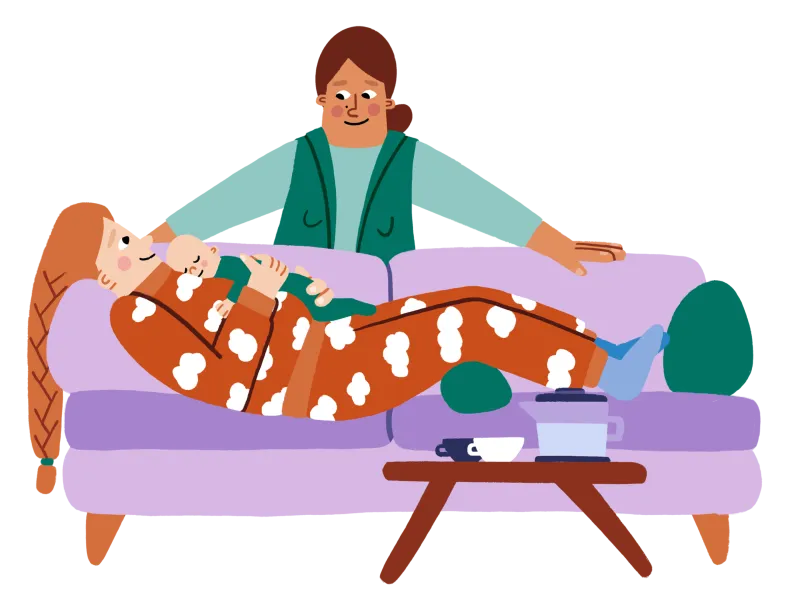
The postpartum period is the time after delivery when the changes that occurred during pregnancy begin to recede. Perhaps minor or major birth injuries also need to heal. The phase in which your body recovers lasts between six and eight weeks. You should give yourself as much time as possible and not overwhelm yourself and your child with appointments and visits. Take your time getting to know each other. The bond that is now formed between you and the baby is important for your continued togetherness. Your midwife will guide you through this exciting new time. Health insurance covers the cost of a fixed number of face-to-face and telephone consultations. If you want, your midwife will even look after you until the end of breastfeeding. The midwife can visit parents who bottle-feed their child until the baby is 9 months old. Six to eight weeks after the birth, you'll have a final check-up. The results are recorded on page 16 in your maternity record (Mutterpass).
When your breast milk comes in
The first few days after delivery are called the early postpartum period. During this time the breast milk is formed and replaces the viscous colostrumColostrum Vormilch Colostrum is the breast milk produced during the first two to five days after giving birth. This breast milk has a yellowish tint, is thicker than regular breast milk and contains an especially high level of nutrients. Colostrum is easily digestible and has a high concentration of important ingredients, making it perfectly suited to the needs of newborns. Although babies can only drink small amounts directly after birth, they get all the nutrients they need from the colostrum.. The colostrum contains important nutrients and antibodies and is easy for your newborn to digest. For many mothers it is a particularly beautiful moment when they put a baby to their breast for the first time to drink. But sometimes it takes longer for breastfeeding to work out well. Your midwife is there to help you with breastfeeding problems.
Lochia: post-birth vaginal discharge
During the time that your uterus is healing, you will notice fluid coming out of your vagina. This discharge is called lochia. Remnants of pregnancy are excreted, for example, tissue remnants or remnants of the custard-like vernix caseosaVernix caseosa Käseschmiere Vernix caseosa, also called vernix or birthing custard, is the cheesy, waxy, white substance that babies are covered with at birth. This antibacterial layer protects the skin of the newborn during pregnancy and facilitates the birthing process. It is mainly made up of water and different fats. After birth, it protects the newborn from infections, cold and moisture loss. that your baby was coated with during pregnancy. The lochia flow lasts between two and six weeks. The color and consistency of the excreted fluid change from week to week.
Postpartum hygiene
You should pay special attention to cleanliness during the postpartum period. It's important that germs don't get into your sore uterus. That can lead to serious infections. You can get special postpartum sanitary padsPostpartum pads Wochenbetteinlagen Postpartum pads, also known as maternity pads, are sanitary pads that are designed to absorb wound secretions after childbirth. As the placenta is expelled shortly after birth, it leaves a wound inside the uterus. This wound and any injuries sustained during childbirth cause post-partum vaginal discharge, which can be absorbed by postpartum pads. The pads are worn like normal sanitary pads. at the drugstore. You should also regularly rinse your vulva with lukewarm water. When doing so, make sure that the water does not penetrate deeply and that you do not use shower gels or other products for intimate cleansing. Rinsing is also important if you've had a perineal tear or incision. The wound in this area needs your attention. There's nothing wrong with baths in your bathtub. You should keep your full bath rather short, though. That's how you avoid your birth injuries softening up.
Constipation and painful bowel movements
During the postpartum period, you may still experience some bothersome kinds of discomfort. But they are all no cause for concern. In the first few days after giving birth, for example, many people do not have a bowel movement. You are afraid that going to the toilet will cause pain or that the suture that was created after a perineal tear or incision will not hold. If this is also the case for you, then consult your doctor or midwife if the constipation lasts more than five days. Often an enema, or gentle laxatives are then advised.
Sweating and hair loss
Your hormones also needs some time to adjust. For example, this is the reason people often sweat profusely during the postpartum period. Change your clothes more often so you feel comfortable and healthy. You may also lose a lot of hair now. That's because your oestrogen levelsOestrogen Östrogen Oestrogen is the generic medical term for different sex hormones. Oestrogens are found in all humans, but they play a particularly important role in the female body. They are produced in the ovaries, testes, adrenal cortex and placenta. Among other things, they have an influence on the menstruation cycle, breast growth, and metabolism. are dropping. During pregnancy, your hair growth was stimulated. Now your body settles back down and the extra hair falls out. In most cases, hormones regulate themselves within the first six months after birth. It may take a bit longer for your hair to grow back to the way it was before.
Exercise during the postpartum period
The weeks after birth are for your recovery. So if you find that exercise is good for you, there's nothing wrong with it. Please pay close attention to what your body needs now and what it can do. You shouldn’t swim until the lochia flow has stopped. You could come into contact with pathogens in the water.
Sex
For most people, it takes a while after giving birth before they feel like having sex again. However, if you already feel like it, you should use a condom during sex until the lochia flow is over. Please inform yourself about which contraceptive methods are suitable for you and your partner, because you can become pregnant again very soon after giving birth.
Baby blues and postpartum depression
It happens very often that your feelings fluctuate after giving birth. Sometimes the great joy of having a baby is followed by a low mood. It may also be that the expected high fails to materialise altogether. This feeling is called ‘baby blues’ or postpartum depression. It is very important to know that you are not alone in such an experience. You should urgently get help and especially talk to your midwife or doctor. You know what to do.